

Bilim Dünyası, Kamu ve Gıda Sektörü Güvenli Gıdanın Geleceği İçin Buluştu
Güvenli gıdaya erişim yalnızca bir tüketici hakkı değil, toplum sağlığının, ekonomik gücün ve sürdürülebilir kalkınmanın temel şartı.
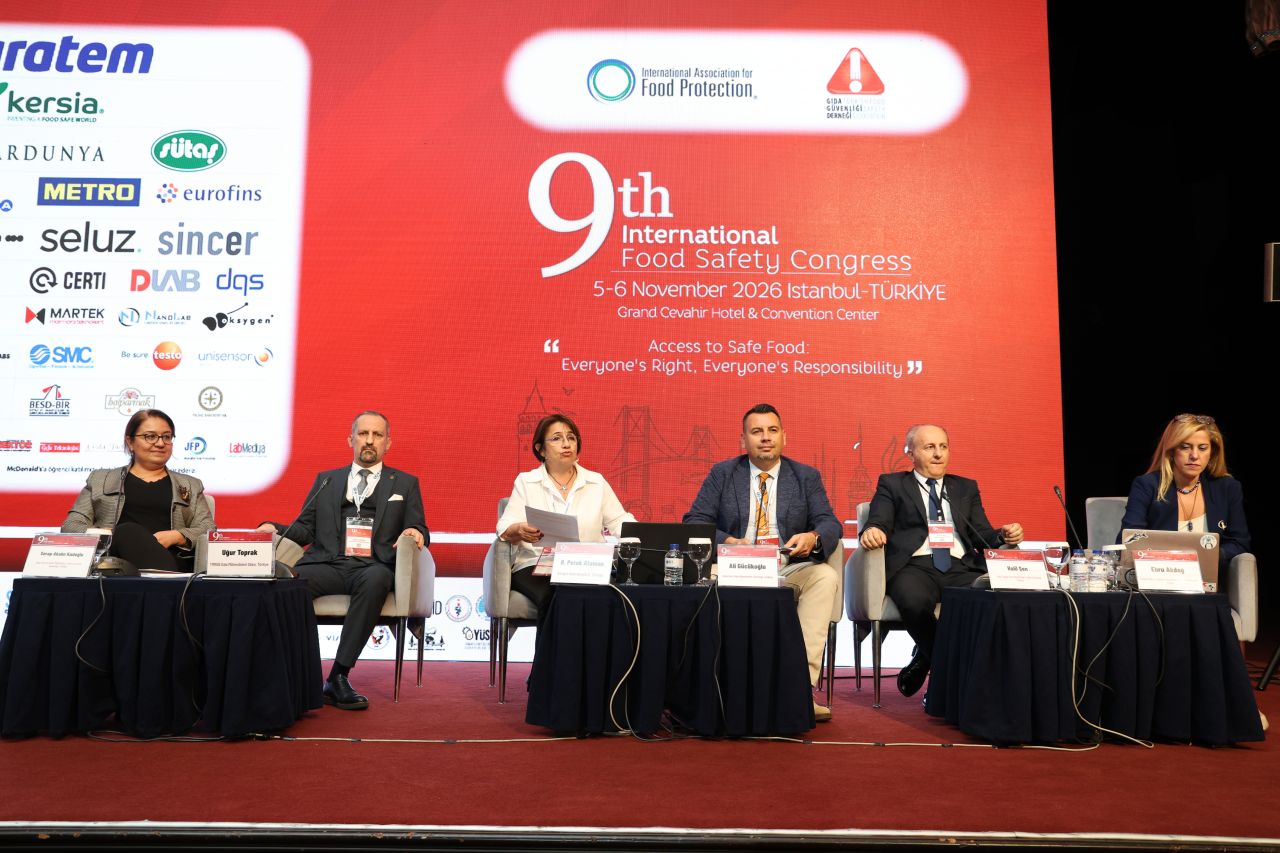
Tarladan sofraya uzanan süreçte gıdanın güvenilirliğini korumak; üreticiden tüketiciye, bilim dünyasından kamu kurumlarına kadar herkesin ortak sorumluluğunu oluşturuyor.
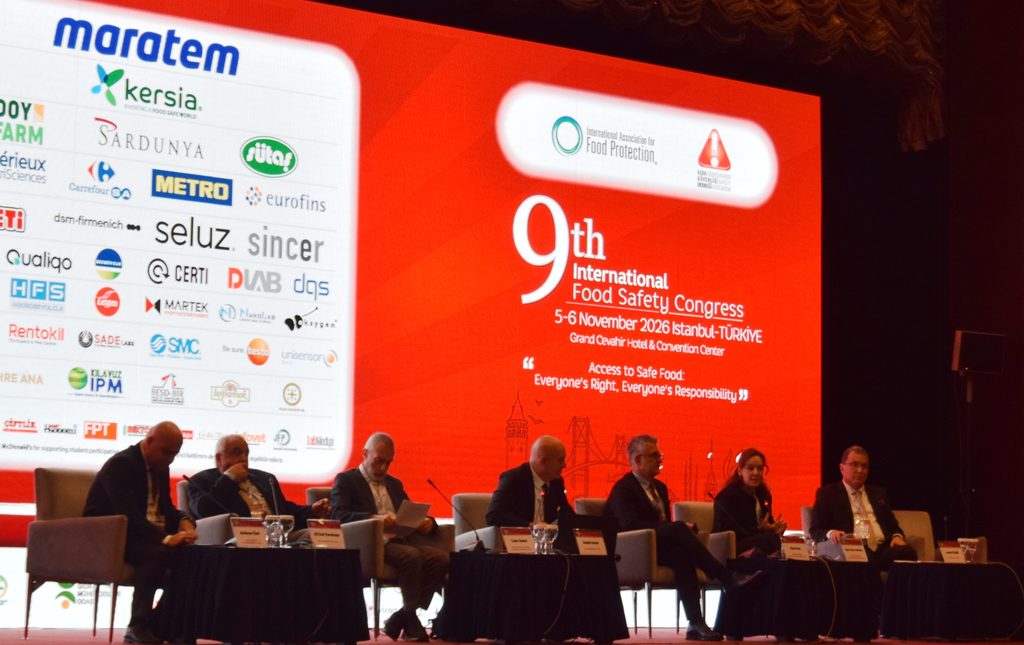
Bu önemli sorumluluk, 5-6 Kasım 2026 tarihlerinde İstanbul Grand Cevahir Hotel & Kongre Merkezi’nde düzenlenen 9. Uluslararası Gıda Güvenliği Kongresi ile ulusal ve uluslararası düzeyde kapsamlı biçimde ele alındı.

Türk Gıda Güvenliği Derneği ve Papyon Organizasyon Reklam Turizm San. ve Tic. Ltd. Şti. organizasyonunda gerçekleştirilen kongre, bilim insanlarını, kamu temsilcilerini, akademisyenleri, gıda sektörü profesyonellerini ve uluslararası kuruluşların temsilcilerini aynı platformda buluşturdu.
“Güvenli Gıdaya Erişim: Herkesin Hakkı, Herkesin Sorumluluğu” temasıyla düzenlenen kongrede, gıda güvenliğinin bugünü ve geleceği; bilimsel araştırmalar, teknolojik yenilikler, sektörel deneyimler ve uygulama örnekleri ışığında değerlendirildi.
Açılışta Türkiye’nin Üretim Gücü ve Küresel İş Birliği Mesajları
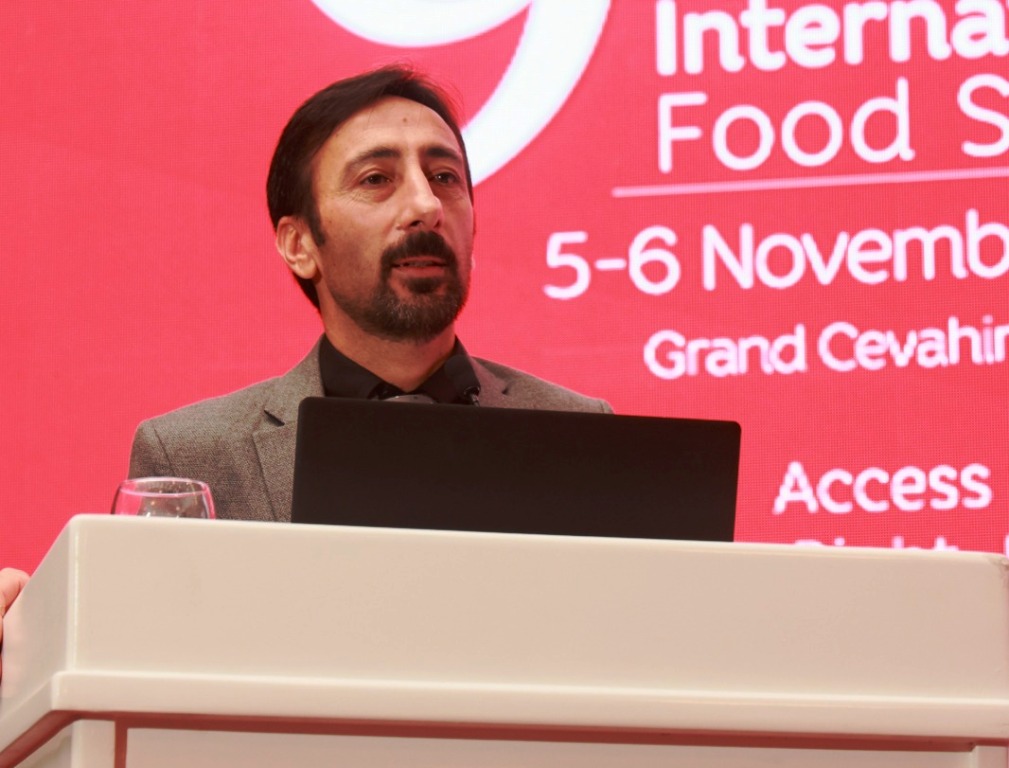
Kongrenin açılış bölümünde Tarım ve Orman Bakanlığı Gıda Kodeks ve Yem Mevzuatı Daire Başkanı Selim Kaplan, Türkiye’nin gıda üretimi ve ihracat kapasitesine ilişkin değerlendirmelerde bulundu.
Programda Tarım ve Orman Bakanı İbrahim Yumaklı’nın açılış konuşması yer almasına rağmen, açılışta Bakanlığı temsilen konuşmayı Selim Kaplan gerçekleştirdi.
Kaplan, gıdanın küresel ölçekte stratejik öneminin giderek arttığına dikkat çekerek Türkiye’nin üretim altyapısı, gelişmiş gıda sanayisi ve mevzuat sistemiyle yaklaşık 200 ülkeye ihracat gerçekleştiren güçlü bir konumda bulunduğunu vurguladı.
Gıda güvenliğinde kamu denetiminin yanı sıra tüketici bilincinin de belirleyici olduğunu ifade eden Kaplan, gıda okuryazarlığının geliştirilmesine yönelik çalışmalara değindi.
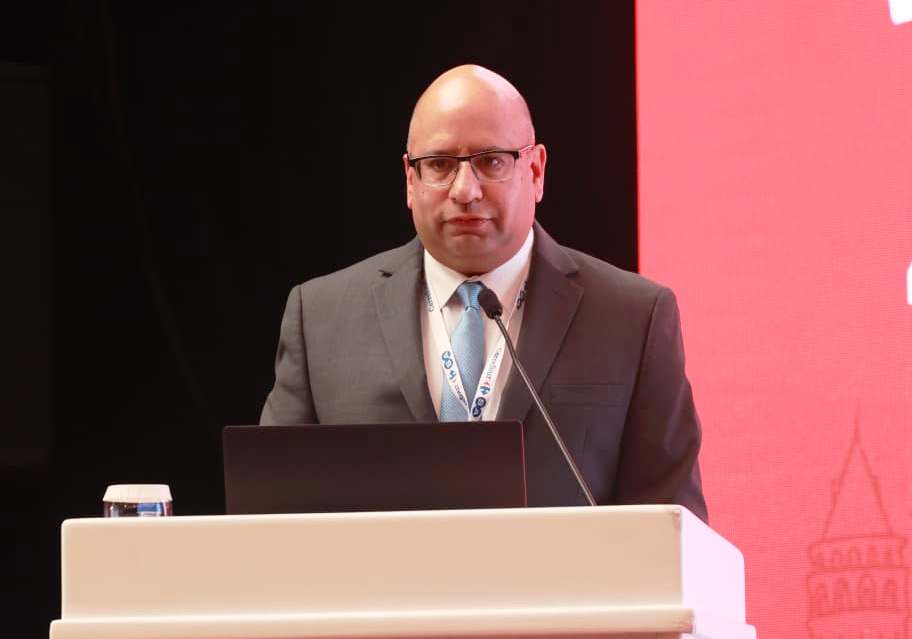
Uluslararası Gıda Koruma Birliği (IAFP) Başkanı Dr. Manan Sharma ise kuruluşun dünya genelinde 4.500’ü aşkın gıda güvenliği profesyonelini bir araya getiren uluslararası yapısını ve bilimsel bilgi paylaşımını güçlendirme misyonunu anlattı. Eğitim programları, bilimsel yayınlar ve mesleki iş birlikleriyle küresel gıda güvenliğine katkı sunduklarını belirten Sharma, Türk Gıda Güvenliği Derneği ile IAFP arasındaki iş birliğinin önemine dikkat çekti.
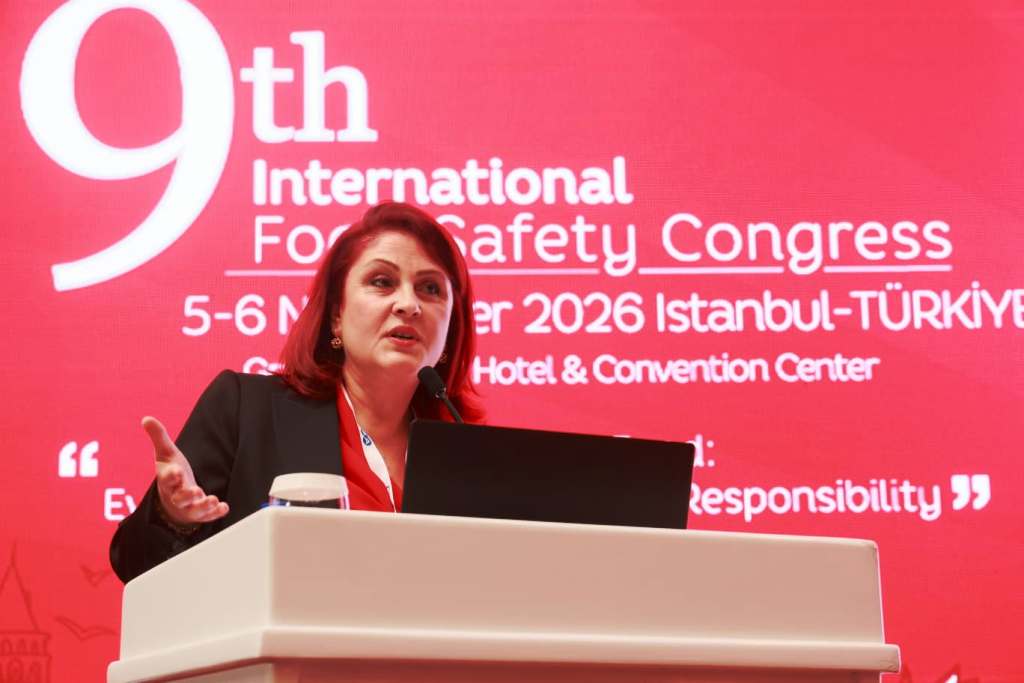
Türk Gıda Güvenliği Derneği Başkanı Filis Gergerli, gıda güvenliğinin toplum sağlığının ötesinde ekonomik kalkınma, üretimde süreklilik ve uluslararası ticaret açısından da taşıdığı önemi ortaya koydu.
Konuşmasında güvenli olmayan gıdaların yol açtığı hastalıklar ve ekonomik kayıplara ilişkin küresel verilere değinen Gergerli, gıda güvenliğine yapılan yatırımların ülkelerin gelişimi ve ekonomik dayanıklılığı açısından vazgeçilmez olduğunu vurguladı.
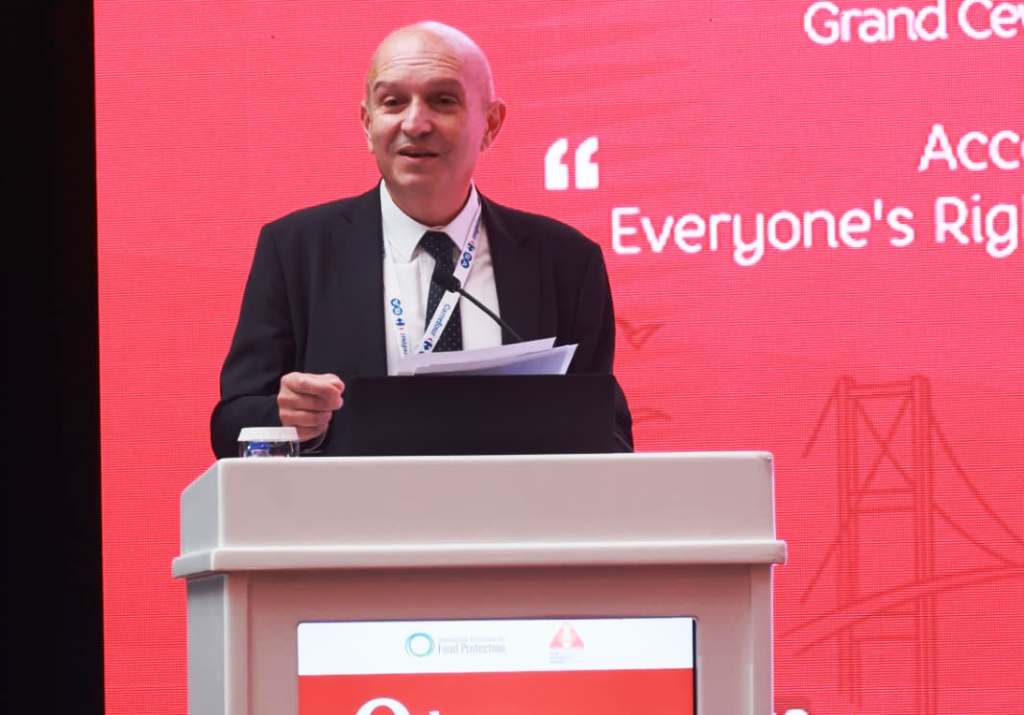
Dr. Samim Saner: Gıda Güvenliğinde Öngörücü Sistemler Dönemi
Kongre Başkanı Dr. Samim Saner, gıda güvenliğinde geleneksel kontrol anlayışının yeni teknolojilerle güçlendirilmesi gerektiğine işaret etti. Üretim süreçlerinde giderek büyüyen veri hacminin doğru değerlendirilmesinin önemini vurgulayan Saner, yapay zekâ ve veri analitiğinin riskleri daha erken aşamada belirleme ve olası sorunları önceden öngörme potansiyeline dikkat çekti.
Saner’in yaklaşımına göre gıda güvenliği sistemleri artık yalnızca ortaya çıkmış bir sorunu tespit etmekle yetinmemeli; güvenliği tehdit edebilecek değişimleri önceden fark ederek önleyici adımların atılmasına da imkân sağlamalı.
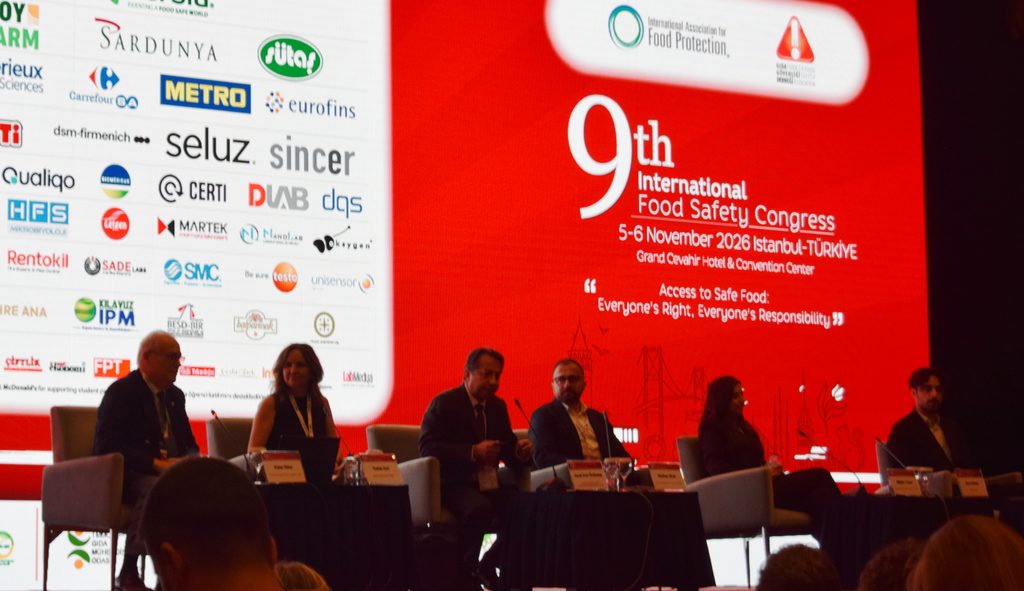
Oxford Üniversitesi’nden Gastrofizik Perspektifi
Kongrenin açılış konferansında Oxford Üniversitesi’nden Prof. Charles Spence, gastrofizik alanındaki çalışmalarını katılımcılarla paylaştı.
Yeme deneyiminin yalnızca tat alma duyusundan ibaret olmadığını bilimsel araştırmalarla ortaya koyan Spence; görme, koku, işitme, doku ve çevresel faktörlerin lezzet algısını nasıl şekillendirdiğini anlattı.
Böylece gıda konusunun yalnızca üretim ve güvenlik süreçlerinden değil, insan algısı ve tüketici deneyiminden de değerlendirilmesi gerektiğine dikkat çekildi.
Tüketicinin Güvenli Gıda Beklentisi de Gündemdeydi
Kongrede tüketici hakları ve toplum sağlığı boyutu da ele alındı. Tüketiciler Derneği (TÜDER) Genel Başkanı Levent Küçük, tüketicilerin piyasada sunulan ürünlerin yasal standartlara uygun ve güvenilir olmasını beklediğini vurguladı.
Küçük’ün değerlendirmelerinde merdiven altı üretimin önlenmesi, taklit ve tağşişle mücadelede caydırıcı yaptırımların uygulanması ve pestisit kalıntıları konusunda etkin denetim yapılması öne çıktı.
Kamu kurumlarının yanı sıra belediyeler, meslek kuruluşları ve sivil toplum örgütlerinin de sorumluluklarını yerine getirmesi gerektiğine dikkat çekti.
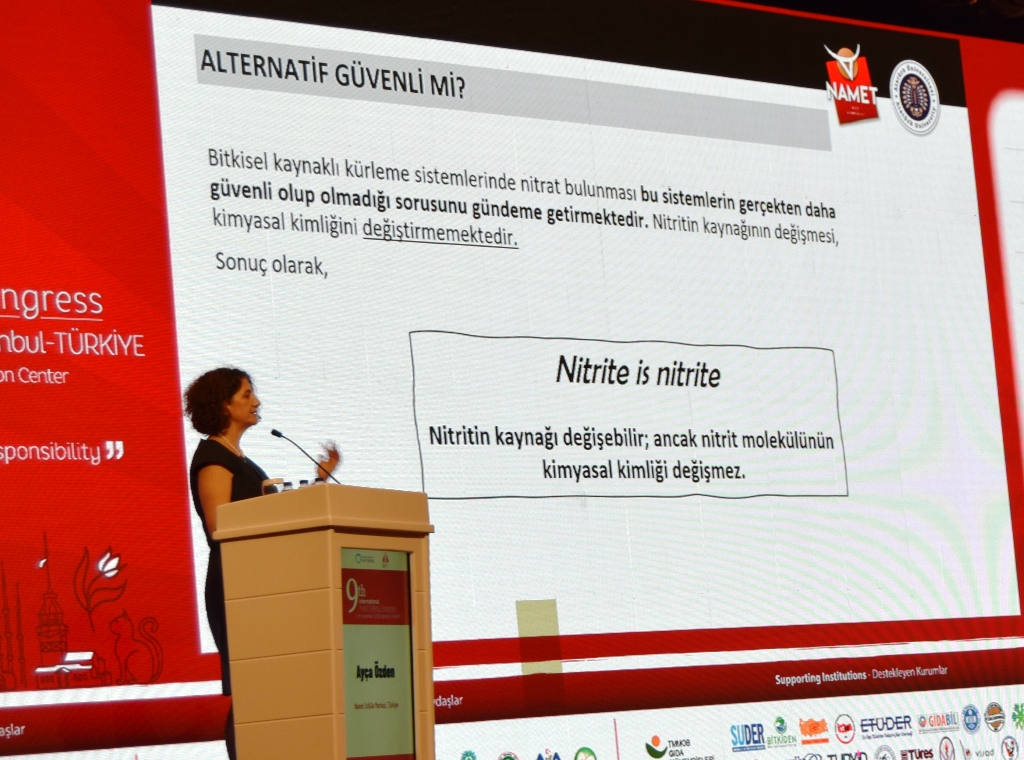
Gıda Güvenliğinin Tüm Boyutları Bilimsel Oturumlarda Ele Alındı
İki gün süren kongre programı, gıda güvenliğini yalnızca tek bir başlık altında değerlendirmek yerine üretimden tüketime kadar uzanan geniş bir perspektifle ele aldı.
Yapay zekâ ve dijitalleşme, gıda zincirinde izlenebilirlik, mikrobiyolojik riskler, gıda sahtekârlığı ve ürün orijinalliği, yeni analiz yöntemleri, kimyasal kalıntılar, biyokoruma, hijyenik riskler, gıda mevzuatı ve bilimsel temelli risk değerlendirmeleri oturumların öne çıkan konuları arasında yer aldı.
İklim değişikliğinin tarım ve gıda sistemleri üzerindeki etkileri, döngüsel ekonomi, sürdürülebilir üretim, Tek Sağlık yaklaşımı, yeni gıda teknolojileri ve tedarik zincirinin krizlere karşı dayanıklılığı da farklı disiplinlerden uzmanların katkılarıyla değerlendirildi.
Akademi ve sektör temsilcilerinin bilimsel sunumları, panel tartışmaları ve uygulama örnekleriyle zenginleşen programda, genç araştırmacıların bilimsel makale ve poster çalışmaları da yer buldu.
Genç araştırmacılar için düzenlenen yarışma ve ödül programı, yeni bilimsel çalışmaların teşvik edilmesi açısından kongrenin dikkat çeken bölümlerinden biri oldu.
Türk Gıda Güvenliği Derneği ve Papyon Organizasyon’a Başarılı Organizasyon
Gıda güvenliği gibi toplum sağlığını, ekonomik gelişimi ve uluslararası ticareti doğrudan ilgilendiren bir alanda böylesine kapsamlı bir bilimsel buluşmanın gerçekleştirilmesi önemli bir organizasyon başarısı olarak öne çıktı.
2004 yılında kurulan Türk Gıda Güvenliği Derneği, tüketicilerden üreticilere, kamu kurumlarından akademisyenlere kadar farklı paydaşları “tarladan sofraya” gıda güvenliği ortak paydasında buluşturma hedefiyle çalışmalarını sürdürüyor. Derneğin bilimsel bilgi paylaşımını, tüketici bilincini ve ulusal-uluslararası iş birliklerini geliştirmeye yönelik yaklaşımı, kongrenin içeriğine de yansıdı.
Organizasyonun diğer önemli paydaşı Papyon Organizasyon Reklam Turizm San. ve Tic. Ltd. Şti. ise kongrenin kapsamlı programının hayata geçirilmesinde üstlendiği organizasyon çalışmalarıyla takdiri hak etti.
Bilimsel içeriğin uluslararası katılımla buluştuğu böyle bir etkinliğin başarılı biçimde gerçekleştirilmesi, güçlü koordinasyonun ve profesyonel organizasyon anlayışının önemini bir kez daha ortaya koydu.
Güvenli Gıda, Ortak Geleceğin Teminatı
9.Uluslararası Gıda Güvenliği Kongresi, gıdanın yalnızca sofraya ulaşan bir ürün olmadığını; insan sağlığı, ekonomik güvence, üretim kapasitesi, çevresel sürdürülebilirlik ve toplumsal refahla doğrudan bağlantılı stratejik bir alan olduğunu bir kez daha ortaya koydu.
Kongrede öne çıkan ortak değerlendirme, güvenli gıdanın yalnızca denetimlerle değil; bilimsel bilgi, güçlü mevzuat, teknolojik gelişim, sorumlu üretim, bilinçli tüketim ve uluslararası iş birliğiyle korunabileceği yönündeydi.
İstanbul’da iki gün boyunca gerçekleştirilen bilimsel buluşma, farklı uzmanlık alanlarını aynı hedef etrafında bir araya getirerek gıda güvenliğinin geleceğine yönelik önemli bir bilgi ve iş birliği zemini oluşturdu.
yilmazparlar@yahoo.com
9th International Food Safety Congress Successfully Held in Istanbul
Scientists, Public Authorities and Food Industry Professionals Gather to Shape the Future of Food Safety
Access to safe food is not merely a consumer right; it is a fundamental requirement for public health, economic strength and sustainable development. Protecting food safety throughout the journey from farm to table is a shared responsibility that involves producers, consumers, scientists, industry professionals and public authorities.
This shared responsibility was at the heart of the 9th International Food Safety Congress, held on 5–6 November 2026 at the Grand Cevahir Hotel & Congress Center in Istanbul.
Organized by the Turkish Food Safety Association and Papyon Organization Advertising Tourism Industry and Trade Co. Ltd., the congress brought together scientists, academics, public-sector representatives, international organizations and professionals from the food industry.
Under the theme “Access to Safe Food: Everyone’s Right, Everyone’s Responsibility,” the two-day event addressed current challenges and future developments in food safety through scientific research, technological innovation, industry experience and practical applications.
Opening Sessions Highlight Türkiye’s Food Production Strength and International Cooperation
During the opening session, Selim Kaplan, Head of the Food Codex and Feed Legislation Department at the Ministry of Agriculture and Forestry, delivered remarks on behalf of the Ministry, highlighting Türkiye’s food production capacity and export strength.
Although the congress programme listed Minister of Agriculture and Forestry İbrahim Yumaklı for the opening address, Selim Kaplan delivered the speech representing the Ministry. He emphasized the growing strategic importance of food in the global landscape and noted that Türkiye has established a strong position through its production infrastructure, advanced food industry and comprehensive regulatory framework. He also highlighted the importance of consumer awareness, alongside public oversight, and the Ministry’s efforts to improve food literacy.
Dr. Manan Sharma, President of the International Association for Food Protection (IAFP), introduced the organization’s international work to strengthen scientific knowledge-sharing and cooperation in food safety. Noting that IAFP brings together more than 4,500 food safety professionals worldwide, Sharma highlighted its educational programmes, scientific publications and professional partnerships. He also underlined the importance of cooperation between IAFP and the Turkish Food Safety Association.
Filis Gergerli, President of the Turkish Food Safety Association, emphasized that food safety affects not only public health but also economic development, continuity of production and international trade. Referring to global estimates concerning illnesses and economic losses associated with unsafe food, Gergerli stressed that investment in food safety is essential for countries’ development and economic resilience.
Dr. Samim Saner: A New Era of Predictive Food Safety Systems
Dr. Samim Saner, President of the Congress, emphasized the need to strengthen traditional food control approaches through emerging technologies. Highlighting the growing volume of data generated throughout food production processes, Saner pointed to the potential of artificial intelligence and data analytics to identify risks at earlier stages and anticipate potential problems.
According to Saner’s perspective, food safety systems must move beyond simply detecting problems after they occur. They should also be capable of identifying changes that may threaten food safety in advance, allowing preventive measures to be taken.
Oxford University’s Charles Spence Explores the Science of Gastrophysics
At the congress’s opening conference, Professor Charles Spence of the University of Oxford shared his research in gastrophysics.
Drawing on scientific studies, Spence explained how the experience of eating is shaped not only by taste but also by sight, smell, sound, texture and environmental factors. His presentation highlighted the importance of considering food not only in terms of production and safety, but also through the perspectives of human perception and consumer experience.
Consumer Expectations for Safe Food Also on the Agenda
The congress also addressed the consumer rights and public health dimensions of food safety. Levent Küçük, President of the Consumers Association of Türkiye (TÜDER), emphasized that consumers expect all food products available on the market to comply with legal standards and be safe for consumption.
His remarks highlighted the need to prevent unregistered and substandard production, impose effective deterrent penalties for food counterfeiting and adulteration, and ensure rigorous controls against excessive pesticide residues. He also called on public authorities, municipalities, professional organizations and civil society groups to fulfil their responsibilities.
Scientific Sessions Address the Many Dimensions of Food Safety
The two-day programme approached food safety from a broad perspective, covering the entire process from production to consumption rather than focusing on a single issue.
Artificial intelligence and digitalization, traceability throughout the food chain, microbiological risks, food fraud and product authenticity, new analytical methods, chemical residues, bioprotection, hygiene risks, food legislation and science-based risk assessment were among the prominent subjects discussed.
The effects of climate change on agriculture and food systems, the circular economy, sustainable production, the One Health approach, emerging food technologies and the resilience of supply chains in times of crisis were also evaluated by experts from different disciplines.
Scientific presentations, panel discussions and practical examples from academia and industry enriched the programme. Research papers and poster presentations by young researchers also featured prominently. The competition and awards programme for young researchers was another notable element, encouraging new scientific work and supporting the next generation of food safety professionals.
Successful Organization by the Turkish Food Safety Association and Papyon Organization
Bringing together such a comprehensive scientific gathering in a field directly connected to public health, economic development and international trade was a significant organizational achievement.
Established in 2004, the Turkish Food Safety Association continues its work to bring together consumers, producers, public institutions and academics around the shared goal of food safety from farm to table. Its commitment to scientific knowledge-sharing, consumer awareness and national and international cooperation was reflected in the congress programme.
The event’s other key partner, Papyon Organization Advertising Tourism Industry and Trade Co. Ltd., also deserves recognition for its organizational contribution to the successful delivery of the congress. Bringing an extensive scientific programme and international participation together requires strong coordination and professional event management. The congress demonstrated the value of that approach.
Safe Food: A Guarantee for Our Shared Future
The 9th International Food Safety Congress once again demonstrated that food is far more than a product reaching the table. It is a strategic issue directly connected to human health, economic security, production capacity, environmental sustainability and social well-being.
A central message emerging from the congress was that food safety cannot be protected through inspections alone. It requires scientific knowledge, effective legislation, technological progress, responsible production, informed consumers and international cooperation.
Over two days in Istanbul, the congress brought together different areas of expertise around a common goal, creating an important platform for knowledge exchange and cooperation to help shape the future of food safety.
yilmazparlar@yahoo.com

Hiç yorum yok:
Yorum Gönder